In modern software development, speed, quality, and reliability are paramount. Continuous Integration and Continuous Deployment (CI/CD) automation has emerged as a cornerstone of DevOps practices, enabling organizations to streamline development workflows while ensuring consistent delivery. By automating repetitive tasks such as building, testing, and deploying code, teams can reduce errors, improve collaboration, and accelerate software release cycles. This article delves into the principles, benefits, and best practices of CI/CD automation, offering actionable insights for organizations aiming to optimize their DevOps processes.
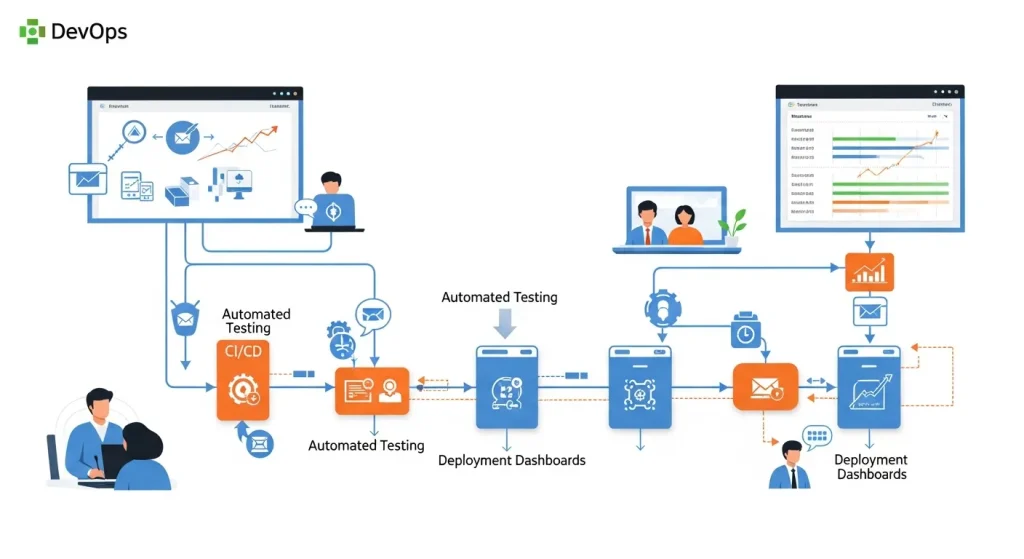
Understanding CI/CD Automation
At its core, CI/CD automation focuses on reducing manual intervention in software delivery pipelines. Continuous Integration (CI) emphasizes automatically integrating code changes into a shared repository multiple times a day, while Continuous Deployment (CD) extends automation to testing and deploying code into production. Together, these practices allow teams to maintain high-quality software, reduce bottlenecks, and respond to user needs more efficiently.
Key components of CI/CD pipelines include:
- Automated Builds: Ensuring that code is compiled, packaged, and ready for deployment without manual steps.
- Continuous Testing: Running automated tests, including unit, integration, performance, and security tests, to verify code quality.
- Automated Deployment: Seamlessly pushing validated code to staging or production environments.
- Pipeline Management: Orchestrating various stages of the workflow while monitoring performance and ensuring reliability.
- Quality Gates: Establishing criteria that code must meet before moving to the next stage, preventing defective builds from progressing.
Benefits of CI/CD Automation
Implementing CI/CD automation brings measurable advantages across development, operations, and business outcomes:
- Faster Delivery: By reducing manual steps, CI/CD pipelines significantly shorten release cycles, allowing features and updates to reach users more quickly.
- Improved Quality: Automated testing ensures that code defects are detected early, reducing bugs and minimizing production issues.
- Reduced Errors: Automation removes repetitive manual tasks that are prone to human error, enhancing overall system reliability.
- Enhanced Collaboration: Teams gain a shared view of development pipelines, fostering better communication and coordination between developers, QA engineers, and operations teams.
- Greater Reliability: Continuous monitoring and feedback loops allow rapid identification of issues and support proactive resolution.
Implementing CI/CD Automation
Designing an Effective Pipeline
A well-structured CI/CD pipeline is modular, clearly delineating stages for building, testing, deploying, and monitoring. Each stage should include:
- Automated triggers for code integration and testing.
- Quality checks and rollback plans to mitigate risks.
- Monitoring mechanisms to ensure smooth operation and detect anomalies.
Integrating Tools and Technology
Successful CI/CD implementation requires careful selection of tools that integrate seamlessly with existing development ecosystems. Considerations include:
- Version Control Systems: Efficiently managing code changes and collaboration.
- Build Tools: Automating compilation, packaging, and artifact management.
- Test Frameworks: Enabling comprehensive unit, integration, performance, and security testing.
- Deployment Tools: Facilitating automated rollouts to staging and production environments.
- Monitoring Systems: Providing real-time insights into pipeline performance and system health.
Technical Considerations
Key technical aspects for CI/CD automation include:
- Build Automation: Ensuring that source code, dependencies, and artifacts are managed effectively.
- Test Automation: Implementing thorough testing strategies that cover functional, performance, and security requirements.
- Pipeline Optimization: Continuously analyzing metrics to improve efficiency, reduce bottlenecks, and scale resources appropriately.
Best Practices
- Pipeline Design: Maintain modular, clear, and auditable stages with robust monitoring and rollback capabilities.
- Automation Strategy: Carefully select tools, automate repeatable tasks, establish quality control measures, and train teams to adopt new processes effectively.
- Documentation: Keep comprehensive records of pipelines, workflows, and configurations to facilitate knowledge transfer and maintain consistency.
Use Cases and Industry Applications
CI/CD automation has broad applications across software development environments:
- Development Workflows: Streamlining code integration, testing, deployment, and performance monitoring.
- Industry Solutions: Enhancing software delivery in web applications, mobile apps, cloud services, enterprise systems, and SaaS platforms.
Overcoming Challenges
Despite its benefits, CI/CD automation presents challenges that organizations must navigate:
- Technical Challenges: Tool integration, environment configuration, complex test automation, deployment intricacies, and performance tuning.
- Operational Challenges: Team adoption, process transformation, resource allocation, ongoing maintenance, and workflow documentation.
Real-World Impact
Organizations that embrace CI/CD automation often see dramatic improvements. One enterprise achieved an 80% increase in delivery speed and 60% fewer errors, while also enhancing team collaboration and system reliability. These results illustrate how CI/CD can serve as a transformative driver for development efficiency and product quality.
Future Trends in CI/CD Automation
Looking ahead, the evolution of CI/CD will incorporate:
- AI Integration: Intelligent automation for smarter testing, predictive issue detection, and optimized resource allocation.
- Advanced Automation Tools: Improved pipelines with deeper integration and end-to-end visibility.
- Enhanced Monitoring: Real-time analytics to detect performance anomalies and potential failures.
- Best Practice Standardization: Industry adoption of standardized CI/CD frameworks and templates for consistent implementation.
Conclusion
CI/CD automation is redefining how software is developed and delivered, offering faster, more reliable, and higher-quality outcomes. By carefully designing pipelines, integrating the right tools, optimizing processes, and fostering team collaboration, organizations can harness the full potential of CI/CD. Adopting these strategies positions teams to meet growing demands, accelerate innovation, and deliver exceptional digital experiences consistently.