Artificial intelligence is reshaping the way organizations build, deploy, and manage cloud-native applications. By integrating AI into cloud-native architectures, businesses can achieve smarter automation, enhanced scalability, and optimized resource management, ultimately driving operational efficiency and innovation. This combination of AI and cloud-native computing represents a critical step forward for enterprises seeking to maximize performance while reducing costs and improving security.
The Evolution of Cloud-Native Architecture
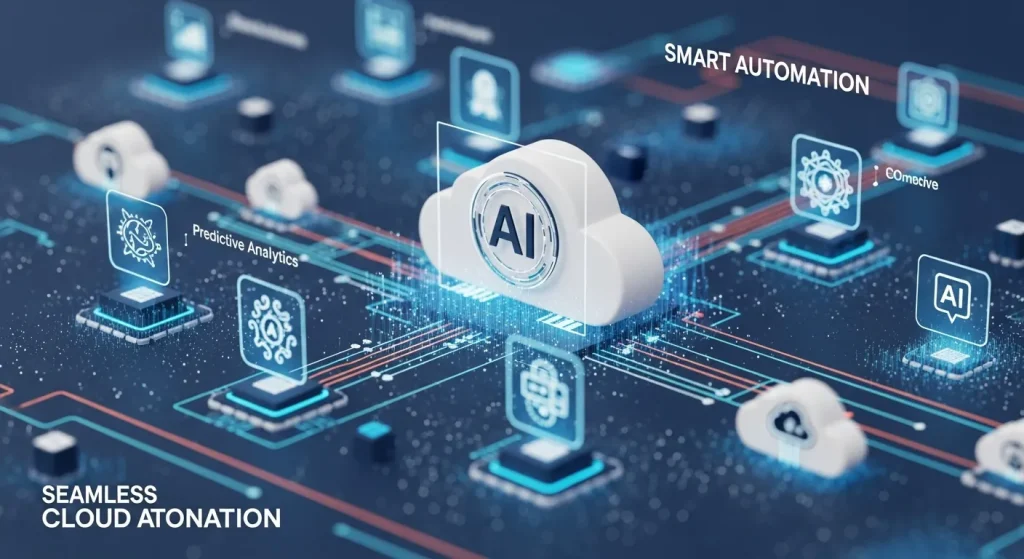
Traditional cloud platforms emphasized automation, elasticity, and basic scaling, allowing applications to run efficiently in distributed environments. However, AI-driven cloud-native solutions take this further by introducing predictive intelligence, real-time analytics, and adaptive resource management. These capabilities allow platforms to anticipate demand, detect anomalies, and respond to changing conditions autonomously. As a result, cloud infrastructure becomes not only scalable but also intelligent, enabling businesses to operate at peak efficiency.
Key Components of AI-Enhanced Cloud-Native Systems
Intelligent Resource Management
AI algorithms can forecast computing needs and automatically allocate resources based on real-time demand. This approach ensures optimal performance while minimizing infrastructure costs. By predicting traffic surges and adjusting compute or storage capacity dynamically, businesses can maintain consistent application performance even during peak usage periods. Intelligent resource management also supports cost optimization by preventing overprovisioning and reducing idle resources.
Advanced Monitoring and Analytics
AI-enhanced monitoring tools offer real-time visibility into system performance and detect potential issues before they escalate. Predictive maintenance capabilities allow enterprises to anticipate failures, reducing downtime and improving reliability. Moreover, anomaly detection algorithms can identify unusual patterns in application behavior, enabling automated responses that prevent service disruptions. These capabilities are essential for maintaining resilience in complex cloud-native environments.
AI-Powered Security
Security is a critical concern for cloud-native applications. AI enhances protection by continuously monitoring for threats, analyzing behavioral patterns, and responding to potential breaches in real time. Automated security updates, threat prediction, and anomaly detection reduce the risk of cyberattacks and ensure regulatory compliance. By leveraging AI for security, enterprises can protect sensitive data and maintain customer trust without compromising performance.
Applications of AI in Cloud-Native Environments
Automated Scaling and Optimization
AI-driven cloud platforms can automatically scale resources based on metrics such as application performance, user activity, and real-time traffic patterns. By adapting infrastructure dynamically, organizations can reduce costs while maintaining high levels of responsiveness. For example, AI can shift workloads between servers, adjust memory allocation, or provision additional compute power during peak demand, ensuring seamless application performance.
Real-Time Analytics for Decision Making
AI integration enables cloud-native systems to provide actionable insights from real-time data. Businesses can analyze performance metrics, user interactions, and operational logs to optimize workflows and improve decision-making processes. These insights support data-driven strategies for both operational efficiency and business growth, making AI a vital tool for competitive advantage.
Best Practices for Implementation
- Define Clear Objectives: Before deploying AI-driven cloud solutions, organizations should identify specific goals, key performance indicators, and success metrics. This ensures that AI initiatives align with strategic priorities and deliver measurable results.
- Select the Right Tools and Platforms: Choosing AI-enabled platforms that integrate seamlessly with existing infrastructure is critical. Robust monitoring, scalable architecture, and strong security features are essential to achieving long-term success.
- Plan for Scalability and Future Growth: Cloud-native environments must accommodate evolving business needs. Planning for future expansion ensures that AI-driven solutions continue to deliver efficiency and reliability over time.
Real-World Impact
Consider a leading e-commerce platform that implemented AI-driven cloud-native solutions. By leveraging predictive scaling, intelligent resource allocation, and AI-powered monitoring, the company achieved a 30% reduction in infrastructure costs, improved application response times by 40%, and strengthened security oversight. These tangible benefits demonstrate the transformative potential of AI in cloud-native operations, enabling businesses to respond rapidly to changing conditions while maintaining optimal performance.
Future Trends
AI-driven cloud-native solutions are expected to evolve toward more sophisticated automation, enhanced predictive capabilities, and improved cost optimization. Advanced AI security features will continue to protect applications in increasingly complex threat landscapes. As AI technologies mature, enterprises will gain even greater insight into system performance, resource utilization, and user behavior, allowing for smarter decision-making and more efficient operations.
Conclusion
AI-driven cloud-native solutions are redefining modern enterprise infrastructure by combining intelligence, scalability, and automation. Organizations that embrace these technologies can optimize resource management, enhance security, and improve system reliability, driving greater operational efficiency and competitive advantage. By integrating AI into cloud-native architectures, businesses are not just improving current workflows—they are building the foundation for future innovation and resilient digital operations.